

How Sunflower Oil Quality Control Works
Our Certifications





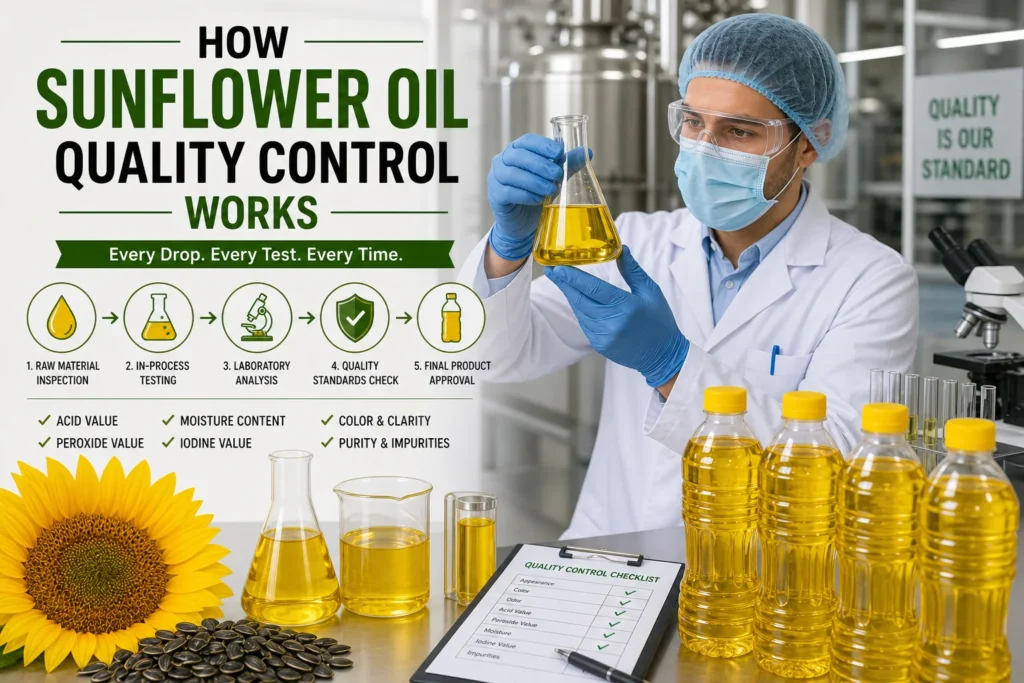
Why Quality Control Is Important in Sunflower Oil Production?
Sunflower oil is widely used in cooking, frying, food manufacturing, and private label products. Because it is a food-grade product, it must meet strict safety and quality standards before it reaches consumers or industrial buyers.
Without proper quality control, sunflower oil may suffer from issues such as contamination, oxidation, poor clarity, off-flavors, or inconsistent performance. These issues can lead to product rejection, financial loss, or damage to brand reputation.
International food safety frameworks such as ISO 22000 emphasize the importance of controlled processes and monitoring systems in food production and supply chains.

Stages of Quality Control in Sunflower Oil Production
1. Raw Material Inspection
The first step in quality control begins with sunflower seeds. Seeds are inspected for cleanliness, moisture content, and overall condition before processing.
High-quality seeds are essential because poor raw materials can negatively affect oil yield, clarity, and stability. This step ensures that only suitable seeds enter the production process.
2. Monitoring During Oil Extraction
During extraction, process parameters such as temperature, pressure, and flow rates are monitored to ensure efficient oil separation and consistent output.
The oil produced at this stage is crude sunflower oil, which still requires refining. Buyers sourcing crude sunflower oil may use it for further processing or industrial applications.
3. Quality Control During Refining
The refining stage is where most quality improvements occur. Each step of the sunflower oil refining process is carefully controlled to remove impurities and improve oil characteristics.
Quality checks during refining may include monitoring:
Free fatty acid levels
Moisture content
Color and clarity
Impurity levels
Processing conditions
These controls help ensure that the oil meets the required specifications for food-grade use.
4. Laboratory Testing and Analysis
Modern sunflower oil plants include laboratory facilities where samples are tested at different production stages. Laboratory testing provides accurate data to verify oil quality and consistency.
Common laboratory tests include:
Peroxide value (indicates oxidation level)
Acidity (free fatty acid content)
Moisture and impurity levels
Color measurement
Odor evaluation
These tests help identify potential issues early and ensure that only high-quality oil proceeds to packaging or export.
5. Storage Quality Control
After refining, sunflower oil is stored in controlled environments to maintain stability. Storage tanks are designed to prevent contamination, oxidation, and degradation.
Temperature control and proper handling are critical during storage. Buyers can explore sunflower oil storage and logistics to understand how oil is preserved before shipment.
6. Packaging Inspection
For bottled and packaged sunflower oil, quality control includes checking packaging integrity. This ensures that bottles, caps, labels, and cartons meet required standards.
Packaging defects can lead to leakage, contamination, or product damage during transport. Businesses working with retail-ready products can review packaging solutions to understand suitable formats.
7. Final Product Testing
Before sunflower oil is released for sale or export, final testing is conducted to confirm that it meets specifications. This includes verifying physical, chemical, and sensory characteristics.
Only oil that passes these checks is approved for distribution.
8. Export and Documentation Control
For international shipments, quality control also includes documentation. Export buyers require accurate paperwork that reflects product specifications and compliance.
Understanding export requirements is essential. Buyers can review export compliance and delivery terms to understand how sunflower oil is traded internationally.
The ICC Incoterms rules define responsibilities between buyers and sellers in global trade.
Quality You Can Trust!
We are proud to be a zero waste to landfill facility. This means nothing goes to waste. While producing our sunflower products and oils, the seed by product produces an amazing livestock feed. Learn more about our bulk sunflower oil, packaged sunflower oil, and our livestock feed products.